

Telkom University’s School of Electrical Engineering Strengthens Industrial IoT Competencies of SMK TI Pembangunan Cimahi Students through Modbus RTU and HMI/SCADA Training
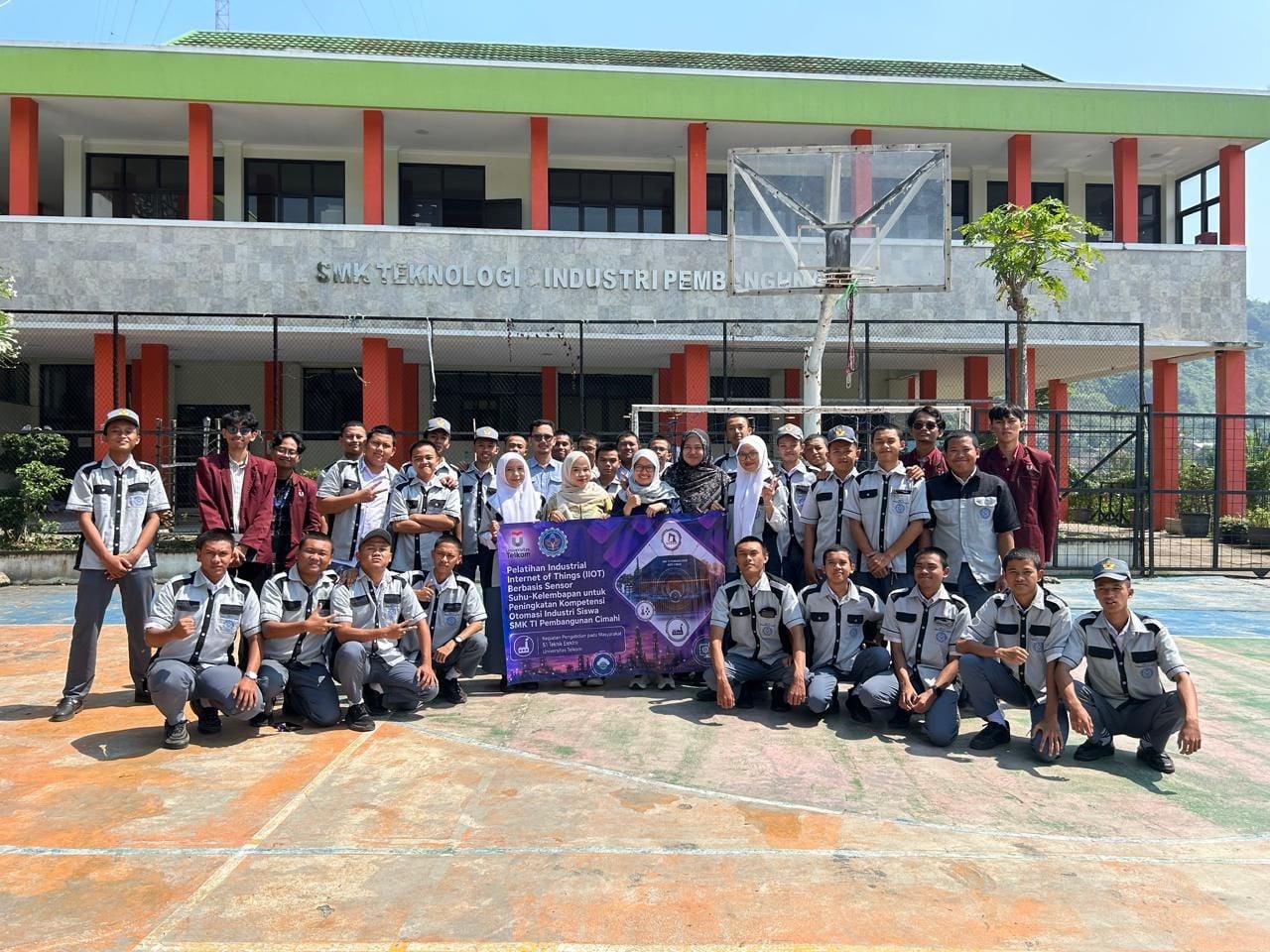
Cimahi — The School of Electrical Engineering, Telkom University, through its community service program, conducted an Industrial Internet of Things (IIoT) training activity at SMK TI Pembangunan Cimahi. The program aimed to strengthen students’ competencies in industrial automation, industrial data communication, and real-time monitoring systems through hands-on practice using Modbus RTU and HMI/SCADA technology.
The activity was carried out by a team of lecturers from the Bachelor of Electrical Engineering Program under the School of Electrical Engineering, Telkom University, consisting of Khilda Afifah, Istiqomah, and Fiky Yosef Suratman. The program was also supported by Telkom University students, namely Adzin Nabil Ihsan, Galih Arya Wisanggeni, Muhamad Farel Ramadhan, and Rega Arzula Akbar, who assisted participants during the practical training sessions. From SMK TI Pembangunan Cimahi, the activity was accompanied by Reni Oktadianingsih and Fauzi Nurjihad as teacher representatives who supported the coordination and implementation of the training at the school.
This community service activity was motivated by the growing need for vocational education to adapt to the development of Industry 4.0. In today’s industrial environment, students are expected not only to understand basic automation concepts but also to gain practical experience in sensor integration, industrial communication protocols, and data visualization systems. Therefore, this training was designed to provide students with direct exposure to technologies commonly used in modern industrial monitoring systems.
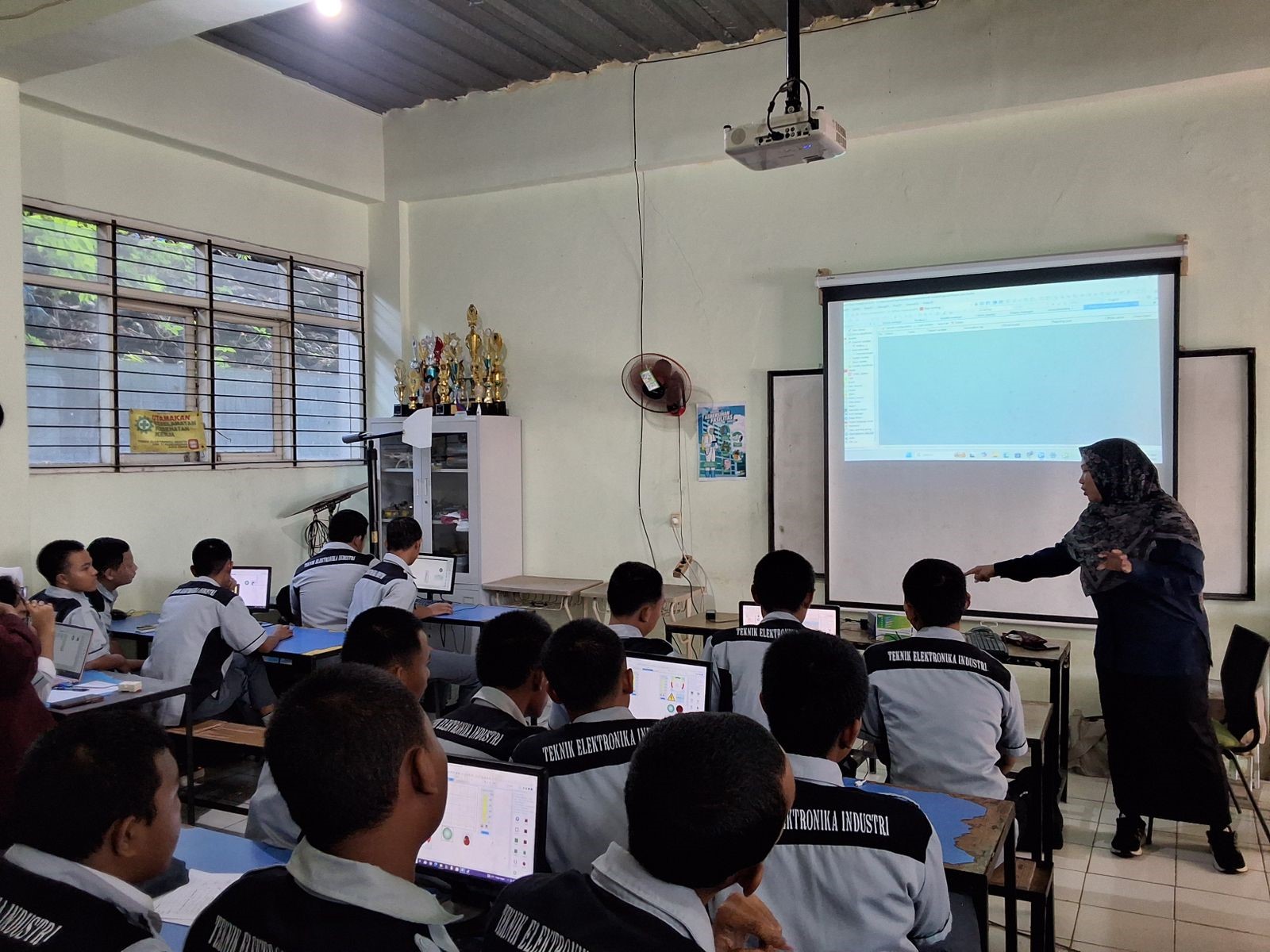
The training applied a participatory and project-based learning approach. The activity was carried out through several stages, including partner needs assessment, training module development, preparation of university students as assistant trainers, project-based practical sessions, and program evaluation. This approach allowed participants to learn by directly building and testing a simple industrial monitoring system.
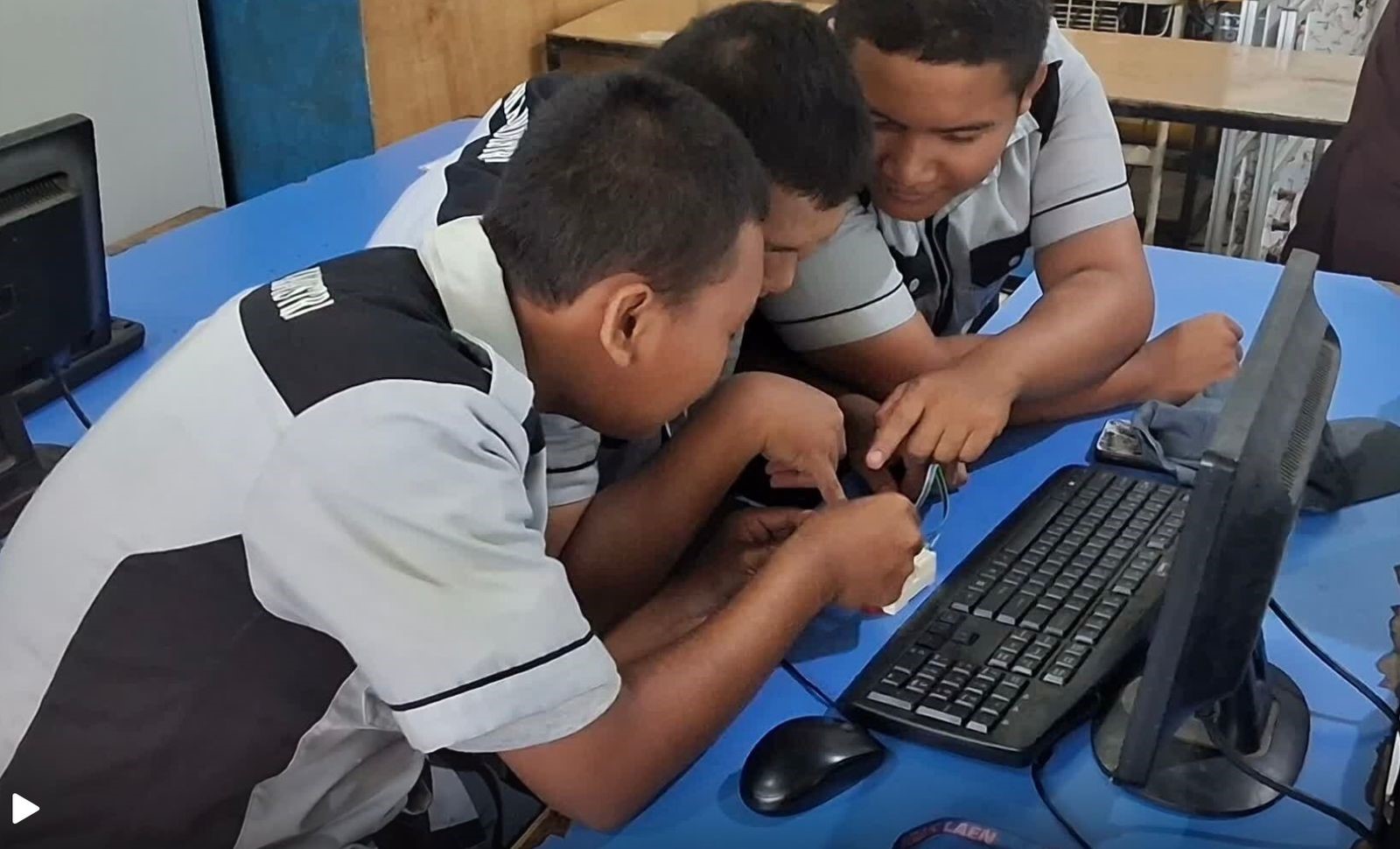
During the training session, students practiced assembling temperature and humidity sensors, wiring RS485 communication lines, configuring Modbus RTU parameters, reading sensor data, and developing a monitoring interface using HMI/SCADA. The system introduced in the training connected field devices to a monitoring display, allowing students to understand how data is acquired, transmitted, and visualized in real time.
One of the main learning outcomes of the activity was that students were able to recognize the workflow of an Industrial IoT system, starting from sensor data acquisition and device communication to real-time data visualization through an HMI interface. The use of HMI/SCADA provided a more practical learning experience because students could directly observe temperature and humidity data displayed in visual forms such as numerical indicators and trend graphs.
The training also introduced students to the importance of communication configuration in industrial monitoring systems. Participants learned that system reliability does not only depend on hardware installation, but also on accurate settings such as device address, baud rate, parity, and communication port configuration. Through this process, students gained a clearer understanding of how industrial devices communicate and how real-time data can be monitored through an integrated interface.
The evaluation results showed a positive response from participants. Most students expressed strong interest in learning Industrial IoT, trying industrial devices such as sensors and HMI, creating simple automatic monitoring systems, and exploring careers in industrial technology and automation. The survey also showed that students enjoyed hands-on learning and were interested in seeing sensor data displayed in real time on a computer.
Although the overall response was positive, several technical aspects still need to be strengthened in future activities, particularly sensor wiring, Modbus register reading, and communication troubleshooting. These aspects are important because they are closely related to the reliability of industrial communication systems and the ability of students to independently build monitoring systems.
Overall, the training successfully provided an applicable learning experience for students of SMK TI Pembangunan Cimahi. The integration of Modbus RTU, RS485 communication, and HMI/SCADA proved to be an effective learning medium to support vocational competency development in industrial automation. This activity is expected to become a foundation for further collaboration and continuous learning in Industrial IoT-based practical education.
Leave a Reply